Outdoor dining has become much more than an extension of indoor seating—it has become an experience in itself.
From vibrant café patios and rooftop restaurants to hotel courtyards and garden lounges, outdoor spaces offer guests an atmosphere that indoor environments often cannot replicate. Fresh air, open surroundings, and natural light create an inviting setting that many customers actively seek.
However, as temperatures rise during summer, these same spaces can become difficult to utilise effectively.
For hospitality businesses, the challenge isn’t simply providing outdoor seating—it’s creating an environment where guests feel comfortable enough to stay, relax, and enjoy the experience.
Designing an outdoor dining space for summer requires more than stylish furniture and attractive décor. It calls for thoughtful planning that balances aesthetics, airflow, shade, and cooling.
Outdoor Comfort Has Become Part of the Dining Experience
Guests today choose restaurants and cafés for more than just food.
They look for ambience, atmosphere, and memorable experiences.
An outdoor dining area often becomes the first choice—provided it feels comfortable.
If excessive heat or poor air circulation makes the space uncomfortable, customers naturally migrate indoors or shorten their visit altogether.
A well-designed outdoor environment encourages guests to:
- Spend more time dining
- Enjoy conversations comfortably
- Return for future visits
- Choose outdoor seating even during warmer months
- Recommend the venue to others
Comfort doesn’t compete with great hospitality—it enhances it.
Start with the Layout
An effective outdoor dining area begins with intelligent space planning.
The arrangement of tables, walkways, planters, and service stations should allow air to move naturally throughout the seating area.
Crowded layouts often restrict airflow and create pockets of trapped heat.
Leaving adequate spacing between seating areas not only improves guest comfort but also creates a more open and welcoming environment.
Designing with airflow in mind from the beginning produces better results than trying to compensate later with additional cooling equipment.
Shade Is the First Layer of Comfort
Before considering mechanical cooling, businesses should evaluate how sunlight interacts with the space throughout the day.
Depending on the location, effective shading may include:
- Retractable awnings
- Pergolas
- Tensile structures
- Large umbrellas
- Landscape elements
- Architectural overhangs
Reducing direct solar exposure lowers heat accumulation and creates a more comfortable environment before cooling systems even begin operating.
Airflow Is More Important Than Lowering Temperature Alone
One of the biggest misconceptions in outdoor cooling is that the goal is simply to reduce temperature.
In reality, continuous air movement often has a greater impact on perceived comfort.
Guests sitting in a well-ventilated outdoor environment generally feel more comfortable than those seated in stagnant air, even when the temperature difference is minimal.
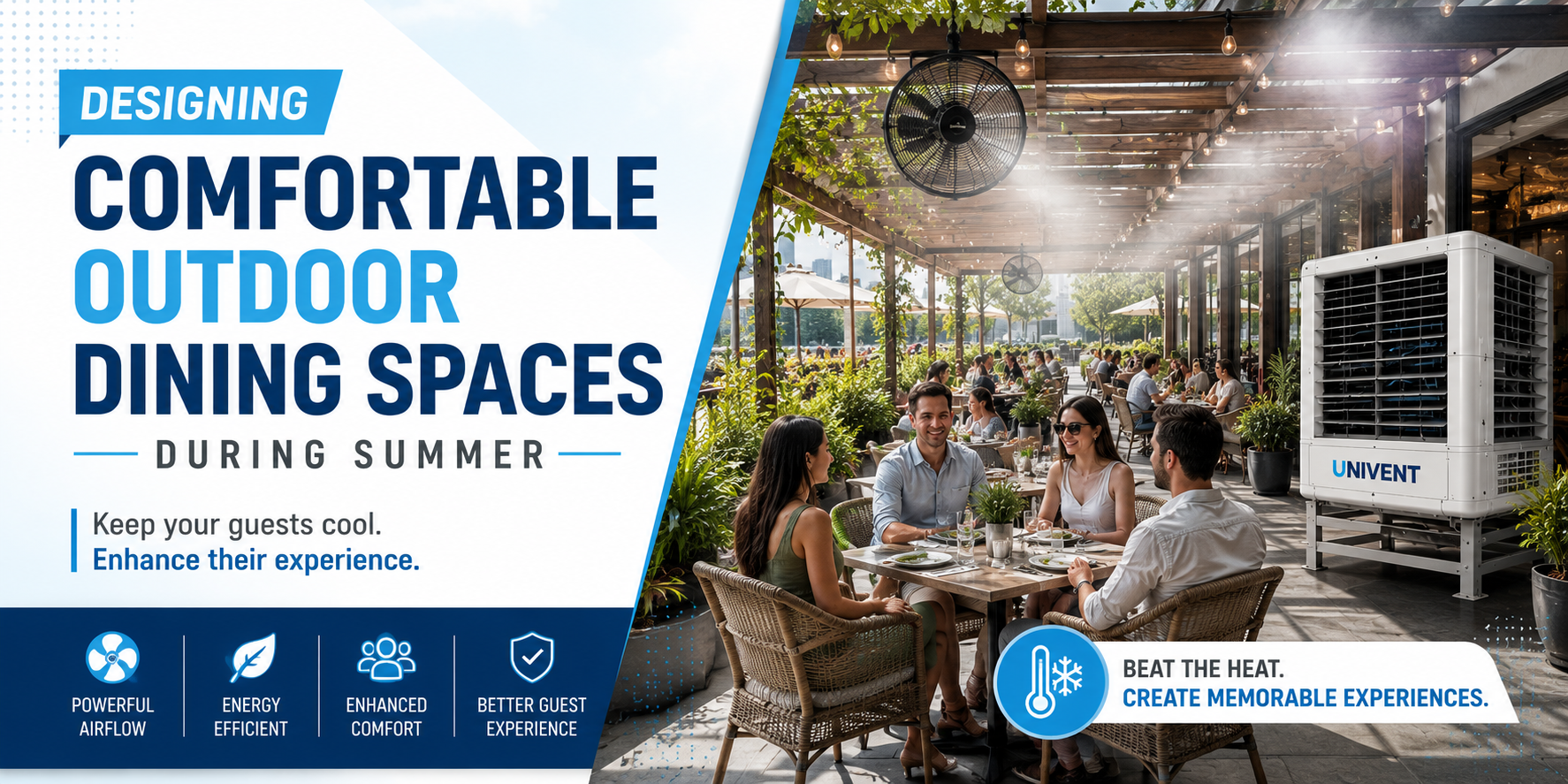
For larger dining areas, commercial air coolers help maintain consistent airflow across multiple seating zones, preventing warm, stagnant pockets from developing.
The result is an environment that feels naturally fresher without disrupting the dining experience.
Design Cooling Around Guest Movement
Every outdoor dining space experiences changing occupancy throughout the day.
Morning coffee service differs from afternoon lunches.
Weekend evenings bring larger crowds than weekday afternoons.
Instead of treating cooling as a fixed installation, businesses should consider how guest movement changes across different operating hours.
Flexible commercial cooling solutions allow airflow to be directed where it is needed most, adapting to seasonal layouts, event configurations, or expanded outdoor seating without requiring permanent infrastructure changes.
Balance Performance with Aesthetics
Outdoor dining spaces are carefully designed to reflect a restaurant’s identity.
Furniture, lighting, landscaping, colour palettes, and decorative elements all contribute to the overall atmosphere.
Cooling equipment should support that environment rather than dominate it.
Modern commercial air coolers are increasingly designed with clean lines and contemporary finishes, allowing them to blend naturally into cafés, hotels, rooftop restaurants, and banquet venues while delivering the performance required for larger outdoor spaces.
When cooling complements the surroundings, guests notice the ambience—not the equipment.
Consider the Entire Guest Journey
Comfort begins before guests take their seats.
Think beyond the dining table and consider areas such as:
- Entrance pathways
- Waiting areas
- Reception spaces
- Outdoor lounges
- Queue management zones
- Event gathering spaces
Providing consistent airflow throughout these touchpoints creates a seamless experience from arrival to departure.
Plan for Peak Summer, Not Average Days
Many hospitality businesses prepare for average weather conditions.
However, guest expectations remain the same even during the hottest weeks of summer.
Planning cooling infrastructure for peak operating conditions helps ensure the outdoor dining area remains usable throughout the season rather than only during milder evenings.
This allows businesses to maximise seating capacity, maintain service quality, and continue delivering positive guest experiences even during periods of extreme heat.
Creating Spaces Guests Choose Again and Again
Guests rarely remember the specifications of a cooling system.
They remember how a place made them feel.
They remember lingering over coffee on a shaded patio, enjoying dinner on a comfortable terrace, celebrating with friends in an outdoor banquet, or relaxing in a hotel courtyard despite the summer heat.
Those experiences don’t happen by chance.
They are created through thoughtful planning that combines design, hospitality, and environmental comfort.
At UNIVENT, we believe outdoor cooling should become a natural part of the hospitality experience. Our commercial cooling solutions are engineered to deliver powerful airflow for large outdoor environments while complementing the aesthetics of modern cafés, restaurants, hotels, banquet venues, and hospitality spaces. Because exceptional guest experiences begin with spaces where people feel comfortable enough to stay.